How Casino Architecture Creates Distinct Experiences
See how casino architecture shapes casino destinations, and use Greenwich Vietnam’s university setting to read entrances, routes, and changes in purpose.
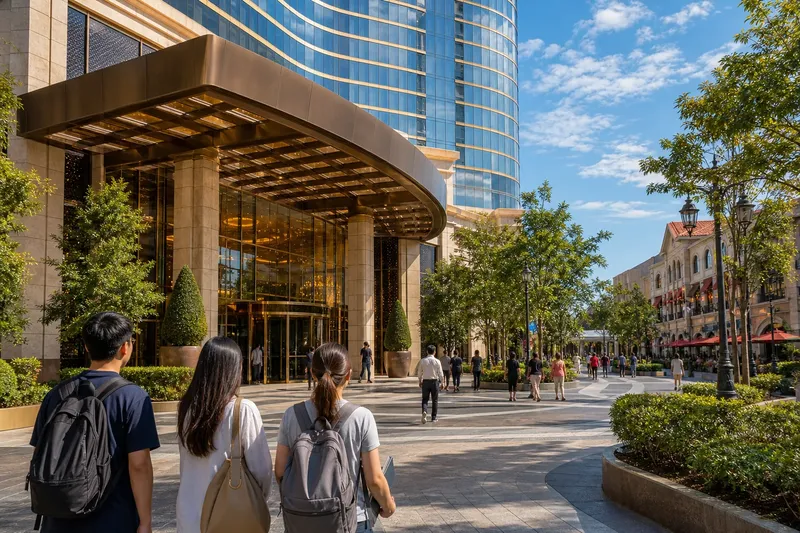
The common mistake in reading casino architecture is to treat a destination as a room with a striking interior, detached from the city and the people moving through it. That misses what matters to a student at Đại học Greenwich Việt Nam: how a venue’s location, approach, and entrance shape the transition from campus routines to a leisure destination.
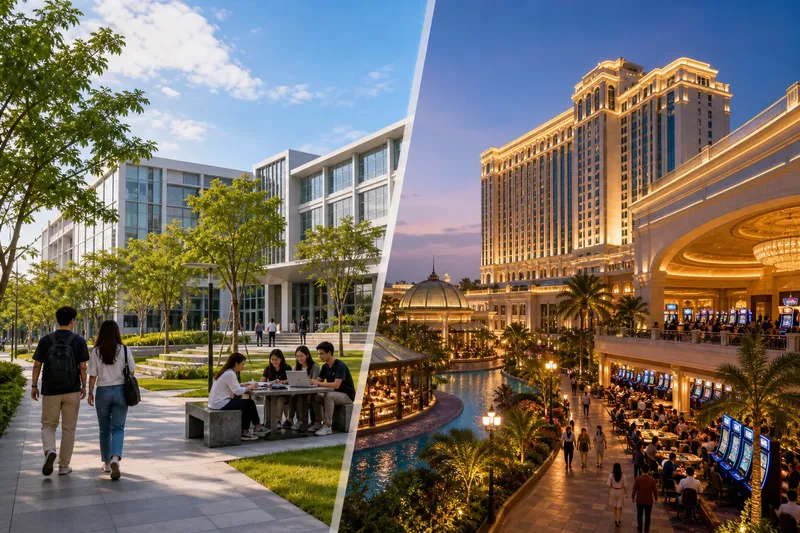
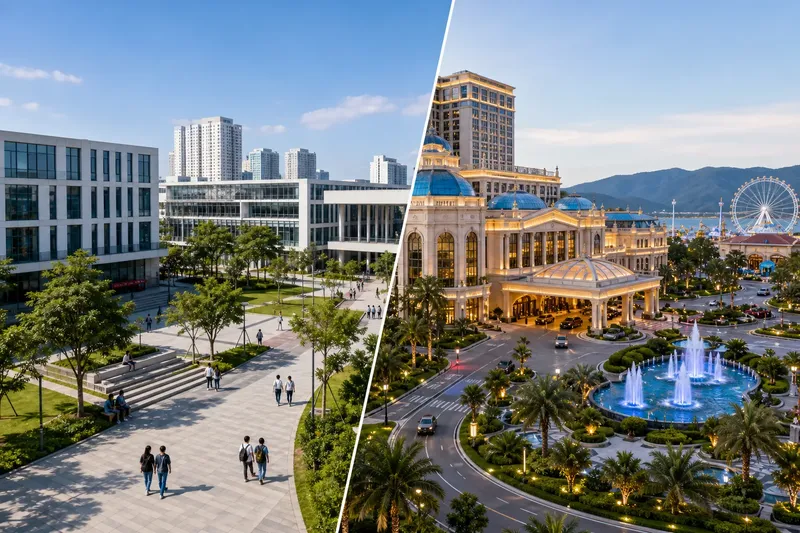
Casino destinations are not interchangeable. Their relationship to surrounding streets, hotels, transit, and public gathering places affects how visitors encounter them, while the interior signals what lies beyond the entrance. Reading both the urban setting and the building gives you a more grounded way to compare places without assuming that every visitor has the same purpose or experience.
Destination And Setting
Start with the destination’s position in its surroundings. A casino may sit within a hotel, a larger resort, or a district with restaurants and entertainment venues. Each arrangement creates a different relationship between the venue and the street: visitors may arrive through a shared lobby, pass through a public plaza, or approach a dedicated entrance.
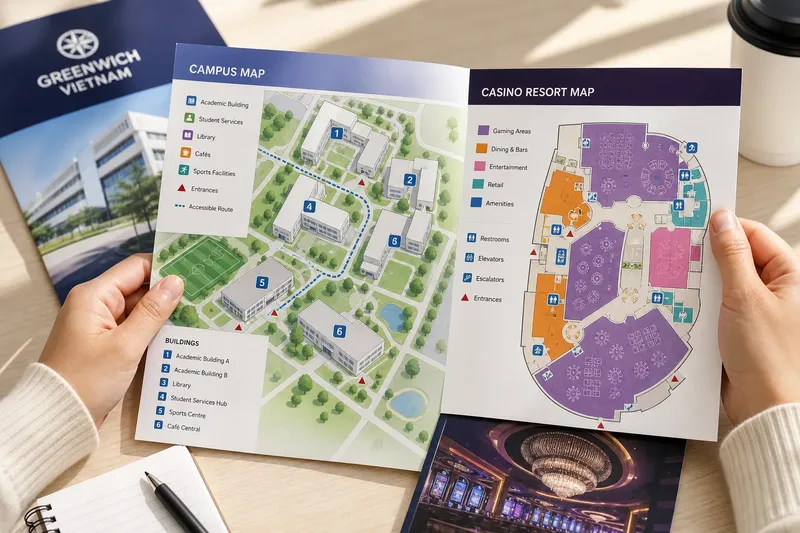
For a university student, this is a useful distinction between studying casino culture and treating a casino as an isolated building. A map can show nearby roads and landmarks, but it cannot tell you by itself whether an entrance is easy to identify or how the building connects to its neighbors. Use the map to form questions, then rely on official venue information and observation from permitted public areas for answers.
Compare destinations by their setting rather than by spectacle alone. Ask what else occupies the district, which routes lead to the venue, and whether the casino shares its building with other uses. This keeps the focus on geography and design, not on assumptions about what a visitor does inside.
Approach And Arrival
The approach is part of the architecture. A visible entrance facing a public street communicates differently from one reached through a hotel lobby or a covered drop-off area. Signs, canopies, lighting, and the alignment of paths can help visitors understand where to go, but those elements should be read in context: a shared entrance may serve several destinations.
Look at the route in sequence: surrounding street, site entrance, building entrance, and interior threshold. Note where the route changes direction, where signs appear, and whether the next destination is visible before you reach it. These observations help explain how the building organizes movement without requiring you to enter a restricted space.
In a campus discussion or design assignment, distinguish what you can observe from what you infer. “The entrance faces a hotel lobby” is an observation; “the layout is intended to keep visitors inside” is an interpretation that needs supporting evidence. That distinction makes a comparison more credible and fair.
University Connections
At Đại học Greenwich Việt Nam, casino destinations can be a subject for studying place, buildings, journeys, and visual culture. A student might compare how a venue appears on a city map, how its approach is represented in published images, and how its entrance relates to the surrounding district. The point is not to promote gambling, but to understand how a building participates in a destination.
Keep academic work grounded in accessible sources. Check the venue’s official website for its address and visitor information, consult a current map for surrounding streets, and use images with clear publication details. If you visit a public area, follow local rules, respect photography restrictions, and avoid recording people without permission.
It is not worth collecting dramatic interior images just because they look impressive. A few well-chosen observations about arrival, neighboring uses, and the entrance’s relationship to the street can support a more useful analysis than a folder of uncontextualized pictures.
Questions About Casino Destinations?
How does location change a casino destination?
Location determines what surrounds the venue and how visitors approach it, such as through a hotel, a resort, or a city street. Describe those connections before making claims about the character or purpose of the destination.
What should students observe from public areas?
Note the route to the entrance, nearby uses, visible signs, and whether the casino shares access with another building. Follow posted rules and do not enter restricted areas to complete an assignment.
How can a student compare casino buildings?
Use the same questions for each place: where it sits, how people approach it, what the entrance communicates, and which other uses share the site. Separate direct observations from interpretations, and cite reliable information for factual claims.
How can images support a design analysis?
Use images to identify visible features such as entrances, street edges, canopies, and shared lobbies. Check captions and source details, and do not treat a photograph as proof of how every visitor experiences the building.
A Worked Campus Comparison
Say you are preparing a short class comparison using two invented destinations, Harbor House and Linden Square; these names and details are hypothetical, not descriptions of real venues. Your starting materials are one city map showing both sites, one official venue page for each, and two publicly available exterior images per destination. The map places Harbor House inside a hotel district and Linden Square beside a mixed-use shopping street; the pages list their addresses, and the images show a shared hotel entrance at Harbor House and a street-facing entrance at Linden Square.
First, mark each address on the map and note the neighboring uses: your working record now says “hotel district” for Harbor House and “shopping street” for Linden Square. Next, compare the approach in the images: Harbor House appears to share its arrival point with the hotel, while Linden Square’s entrance faces the street. Then check each official page against the map; if the address and listed setting agree, keep the setting description, but if they conflict, mark it unresolved and seek a current official source before making a claim.
Your resulting comparison is specific but limited: Harbor House is represented as part of a hotel arrival sequence, while Linden Square is represented as a street-facing destination. The evidence does not establish how visitors feel, what happens inside, or whether either route is easier; those questions require further reliable information. That boundary is a useful result, not a flaw in the assignment.
Field Notes And Decisions
For a campus assignment, record a visible observation and the decision it supports. If a feature is unclear, note the uncertainty rather than filling the gap with an assumption.
- Address: Check whether the official venue page and your map show the same location; if they agree, use the location in your comparison, but if they differ, verify with a current official source before proceeding.
- Neighboring uses: Observe whether the map shows a hotel, shops, or other public destinations nearby; if the surrounding uses are identifiable, describe them, but if not, write “unclear” and avoid naming a district function.
- Entrance position: Check whether the available image shows a street-facing or shared entrance; if it is visible, describe that relationship, but if it is obscured, do not infer the route from the image.
- Approach route: Trace the route shown by the map from a public street or shared lobby; if the connection is clear, include it, but if the map leaves a gap, identify the missing information rather than guessing.
- Image context: Check the caption, source, and date when available; if those details identify the image’s context, cite them, but if they are absent, use the image only for cautious visual description or leave it out.
- Photography rules: Check posted venue and local rules before taking pictures; if photography is permitted in the public area, follow the stated limits, but if the rules prohibit it or remain unclear, do not photograph and use published material instead.
Casino architecture becomes easier to discuss when the building is connected to its destination and route of arrival. For students at Đại học Greenwich Việt Nam, the main search phrase, casino destinations, can lead to a focused comparison: identify the setting, trace the approach, describe the entrance, and keep every conclusion within what the evidence supports.