University of Greenwich Vietnam and the Geography of Casino Destinations
University of Greenwich Vietnam and casino destinations use names and design to frame place; separate campus identity from the commercial story a venue sells.
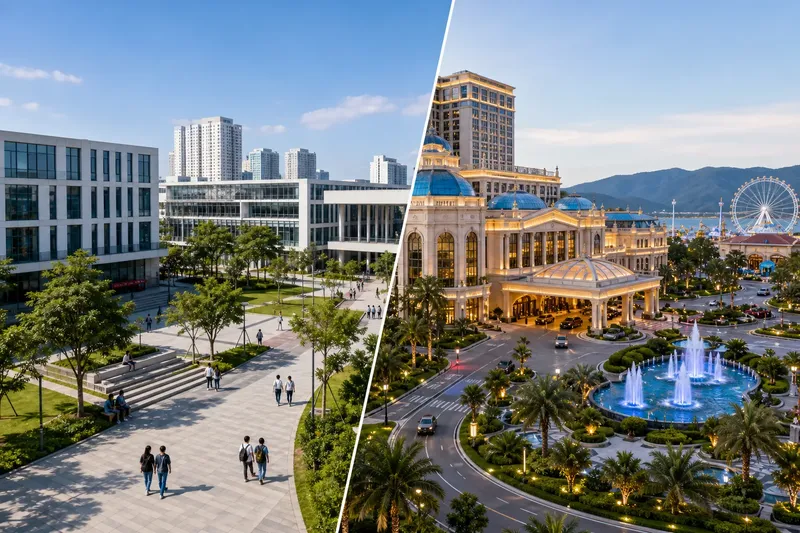
The common mistake is reading “University of Greenwich Vietnam” or a casino resort name as a full account of the place. That shortcut can blur the difference between a university’s educational identity and a destination venue’s commercial design.
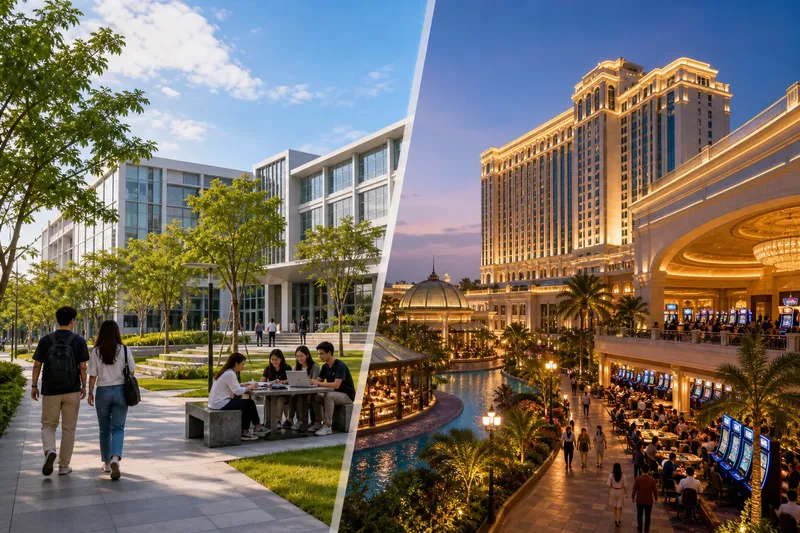
Compare them as different kinds of settings, not as equivalent experiences. A university organizes learning and student life; a casino destination organizes leisure and hospitality. Their buildings, routes, and surroundings reveal how each purpose shapes the experience people are invited to imagine.
Institutional identity
A university name identifies an institution, but it does not by itself explain the exact structure of an affiliation, the location of a program, or what student life is like. For University of Greenwich Vietnam, use current official materials to understand how the institution describes its identity, programs, and sites.
Casino destinations use names differently. A name may evoke a city, landscape, or resort ideal as part of a commercial image. That image can set a mood, but it is not a description of the venue’s architecture or its surrounding neighborhood.
Design and daily use
Campus design is tied to activities such as attending class, studying, and meeting other students. Classrooms, shared spaces, libraries, and paths between buildings help shape daily routines. Promotional images can suggest a campus atmosphere, but they cannot establish how spaces are arranged or used.
A casino destination may bring gaming, dining, entertainment, lodging, or retail together. Lighting, materials, signs, entrances, and interior routes help organize a visitor’s movement and shape the venue’s atmosphere. Those choices serve a commercial leisure setting, not the same purpose as campus planning.
Geography and context
A campus may sit within a city or occupy a more distinct site, while a casino destination may be part of a resort complex or a commercial district. The surrounding streets, nearby buildings, and connections to public spaces give each location a context that its name alone cannot provide.
For a specific place, use sources suited to the question. Official institutional or venue descriptions clarify how an organization presents itself. Current maps show streets and nearby buildings; photographs show selected views, not the whole setting. Keep those limits in mind rather than treating any single source as a complete portrait.
How do names shape place?
What can a university name tell me?
It identifies the institution as presented by that organization, but does not settle the details of a partnership or describe student routines. Check current official materials for the program’s identity and location.
How does a casino destination use geography?
Its branding may borrow the feel of a place, while the venue’s actual setting depends on its buildings and surroundings. Consider whether it sits within a larger complex, a commercial district, or another kind of neighborhood.
Why compare a campus with a casino venue?
The comparison helps explain how design and setting communicate different purposes. It does not imply that student life and commercial leisure have the same routines or priorities.
Which design details are useful to notice?
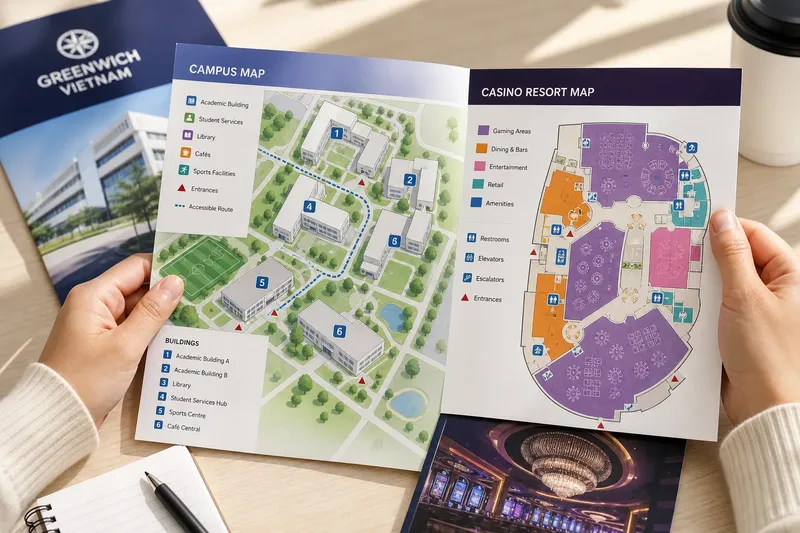
Look at entrances, shared spaces, connections between buildings, and the activities gathered in one area. These details show how a place is organized without relying on its promotional language.
A worked comparison
Imagine a student has a program listing that names University of Greenwich Vietnam but gives no campus description. The student starts with two items: the listing and the institution’s current official page. First, they check whether the official page identifies the program and its site; if it does, they record that location, and if it does not, they ask the institution for clarification. Next, they compare the published campus images with a current map of the named site. If the map identifies buildings and nearby streets, they can describe those visible relationships; if the site remains ambiguous, they avoid claiming a specific campus setting. The resulting account separates confirmed institutional details from impressions drawn from images.
Now imagine a visitor sees a casino venue promoted with a resort name and has two sources: the venue’s description and a current map. They check whether the description names a larger complex, then locate the venue on the map. If the map shows surrounding hotels and commercial buildings, they can describe that context; if it shows only the venue and limited nearby detail, they should not infer the character of the wider neighborhood.
Useful checks
- Check whether an official university page names the program; if it does, use that wording, and if it does not, ask the institution before describing the affiliation.
- Check whether the page identifies a site; if it does, compare that location with a current map, and if it does not, avoid assigning the program to a campus.
- Check whether a map shows streets around the venue; if it does, describe the visible connections, and if it does not, consult another current map rather than guessing.
- Check whether a photograph shows an entrance or shared area; if it does, describe only what is visible, and if it does not, do not use it to characterize the whole site.
- Check whether a casino description names lodging, dining, or entertainment; if it does, identify those as advertised features, and if it does not, do not assume they are present.
- Check whether an image and an official description refer to the same location; if they do, use them together for context, and if they do not, keep the claims separate until the site is clarified.
It is not worth trying to decode a campus culture or a neighborhood from a brand name alone. For University of Greenwich Vietnam and casino destinations, the useful distinction is between what an organization says about itself and what the setting’s design and geography actually let you describe.